

Temple of Preah Vihear is located in northern Cambodia in Thommacheat Village, Sra Aem Commune, Choam Ksant District, Preah Vihear Province, bordering Sisaket Province, Thailand. This historical site is approximately 400 kilometers from the capital city of Phnom Penh and about 100 kilometers from Preah Vihear provincial town, built on a high plateau of the Dangrek Mountains at an elevation of 547 meters and stands 657 meters above sea level.

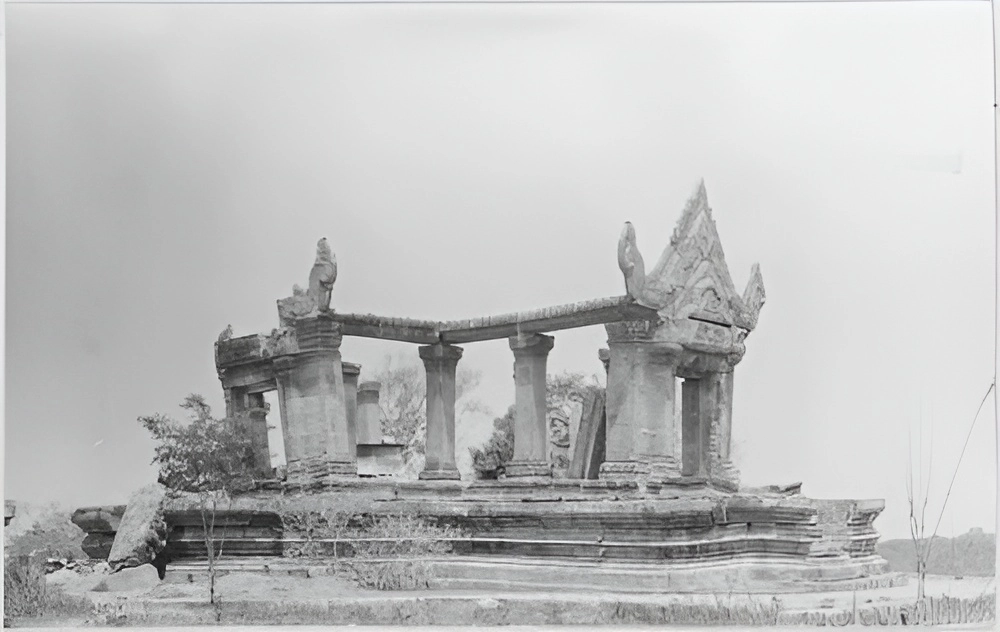
The Temple of Preah Vihear was constructed on a natural mountain in tiered platforms made of sandstone and mountain rock. The temple faces north, featuring five main gopuras (pavilions), and each gopura enclosure contains different structures. This temple is an architectural masterpiece that differs from other temple constructions due to the complexity of each tower, connected by walkways and staircases spanning 800 meters. This is a unique feature of Khmer architecture, showcasing the ingenuity of ancient Khmers in transforming a natural mountain into a sacred one.
Through the architectural structures and inscriptions at the Temple of Preah Vihear, we know that this temple was built during the reigns of several kings, with key monarchs including King Yasovarman I, King Suryavarman I, and King Suryavarman II, which resulted in the varied architectural decorations of the temple. Four major inscription sources at the Temple of Preah Vihear registered under inventory numbers K.380, K.381, K.382, and K.383—along with the Sdok Kok Thom inscription (K. 235), the Baphuon inscription, and the North Khleang inscription—all serve as vital sources of information regarding this temple.
The Temple of Preah Vihear was inscribed as a World Heritage Site on July 7, 2008, in Quebec City, Canada, during the 32nd session of the UNESCO World Heritage Committee. It met Criterion (i) as the Temple of Preah Vihear is an outstanding and unique masterpiece of Khmer architecture, characterized by its layout design and ornamentation, along with a complex structure that connects one element to another along the mountain slope, creating an exceptional landscape that is sacred in both culture and religion.