National Museum of Cambodia
About
National Museum of Cambodia
The main activities of the National Museum of Cambodia include exhibiting, safeguarding and promoting understanding of Cambodia’s cultural and artistic treasures. Keeping objects safe and working to ensure the repatriation of pieces stolen from Cambodia are important aspects of the museum’s work, particularly as looting and illicit export of cultural material are a continuing concern. In addition, the Museum strives to engage its visitors through its exhibitions and to fulfil its role as an integral part of the community. The Museum believes that Cambodia’s cultural heritage is of great value and can provide a source of pride and identity to the Cambodian people who have lost so much in recent decades. The availability of multilingual Museum tour guides and Publications, as well as the Museum’s public library, all serve to increase the accessibility of the collection both for local and international visitors.
Under the auspices of the Cambodian Department of Museums, the Museum has responsibility not only for its own collection, staff and premises but also to support and oversee all other museums in Cambodia.
Outside of Cambodia, the Museum has an active policy of lending objects from its collection for major international exhibitions. This practice was in place before Cambodia’s recent decades of unrest and was reinstituted in the 1990s, starting with an exhibition held at the National Gallery of Australia in 1992. Subsequent exhibitions have been held in France, the USA, Japan, South Korea and Germany. The exhibitions to Australia and France have resulted in significant professional and structural assistance to the Museum from the governments of those countries and it is hoped that international exhibitions will continue to attract such support.
History of the Museum
Tuol Sleng Genocide Museum is the memorial site of “Security Office 21” (S-21) of Democratic Kampuchea (also known as the Khmer Rouge regime) and located in what was then the abandoned city of Phnom Penh, whose citizens had been evacuated on 17. April 1975.
S-21 served as the central hub of a vast prison system throughout the country and was used throughout the period as a secret facility for the detention, interrogation, torture and extermination of those deemed “political enemies” of the regime. Due to a policy of guilt-by-association, at times whole families were detained at the center. Very few inmates were released out of the prison during the years 1975 and 1979. Only 12 former inmates survived the opening of S-21 when Phnom Penh was liberated. Four of them were children.
Approximately 1,720 Khmer Rouge actors worked in and for S-21. Several hundred of them were general workers, including people who grew food for the prison. The rest formed the internal workforce, including administration, guards and interrogators.
Objectives
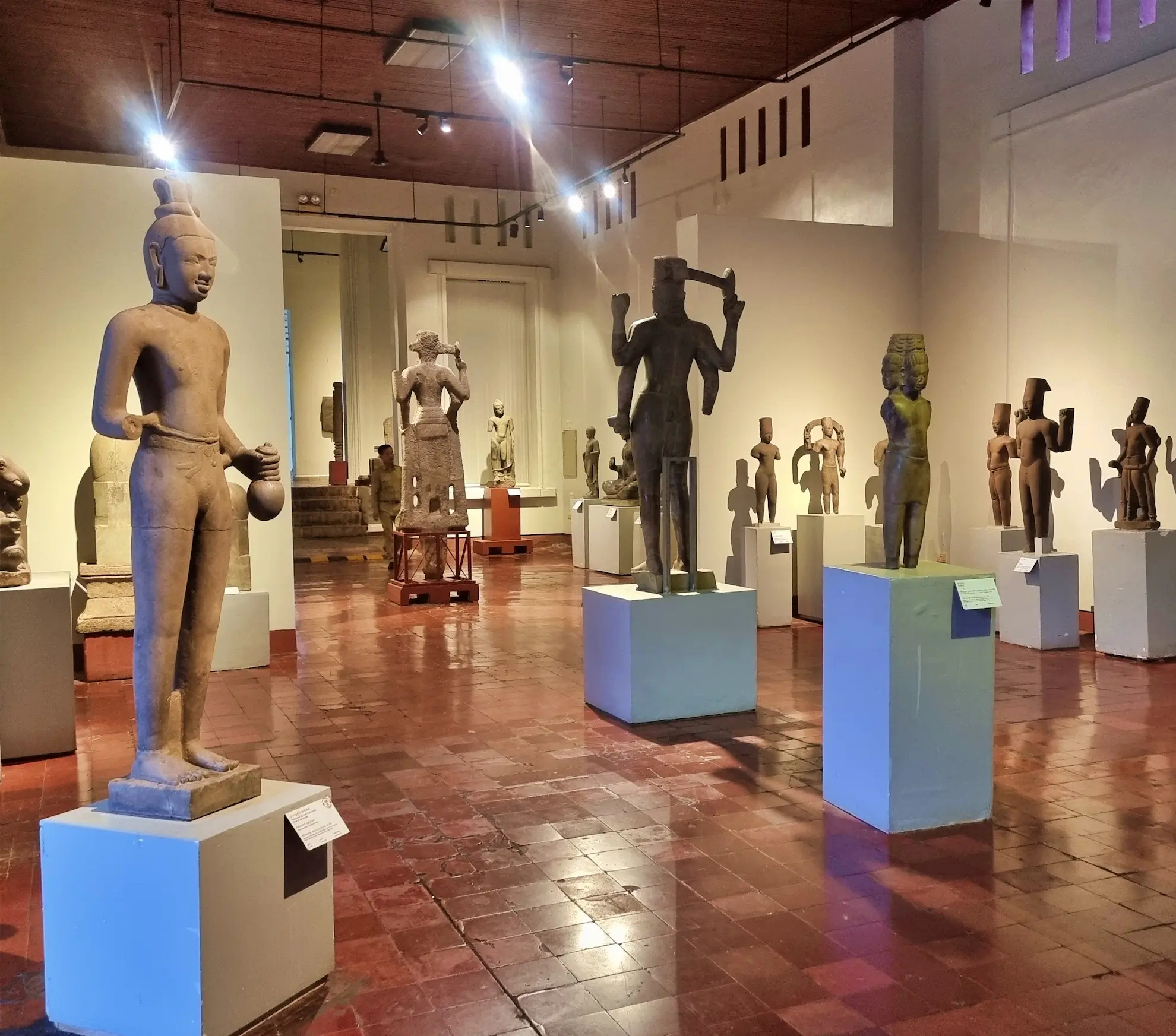
The National Museum of Cambodia houses one of the world’s greatest collections of Khmer cultural material including sculpture, ceramics and ethnographic objects from the prehistoric, pre-Angkorian, Angkorian and post-Angkorian periods.
The Museum promotes awareness, understanding and appreciation of Cambodia’s heritage through the presentation, conservation, safekeeping, interpretation and acquisition of Cambodian cultural material. It aims to educate and inspire its visitors.
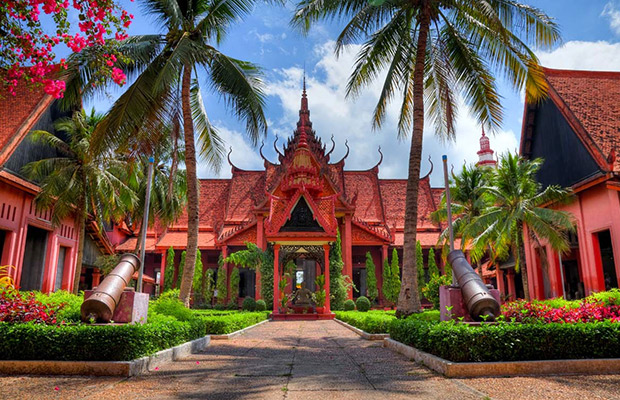
Building
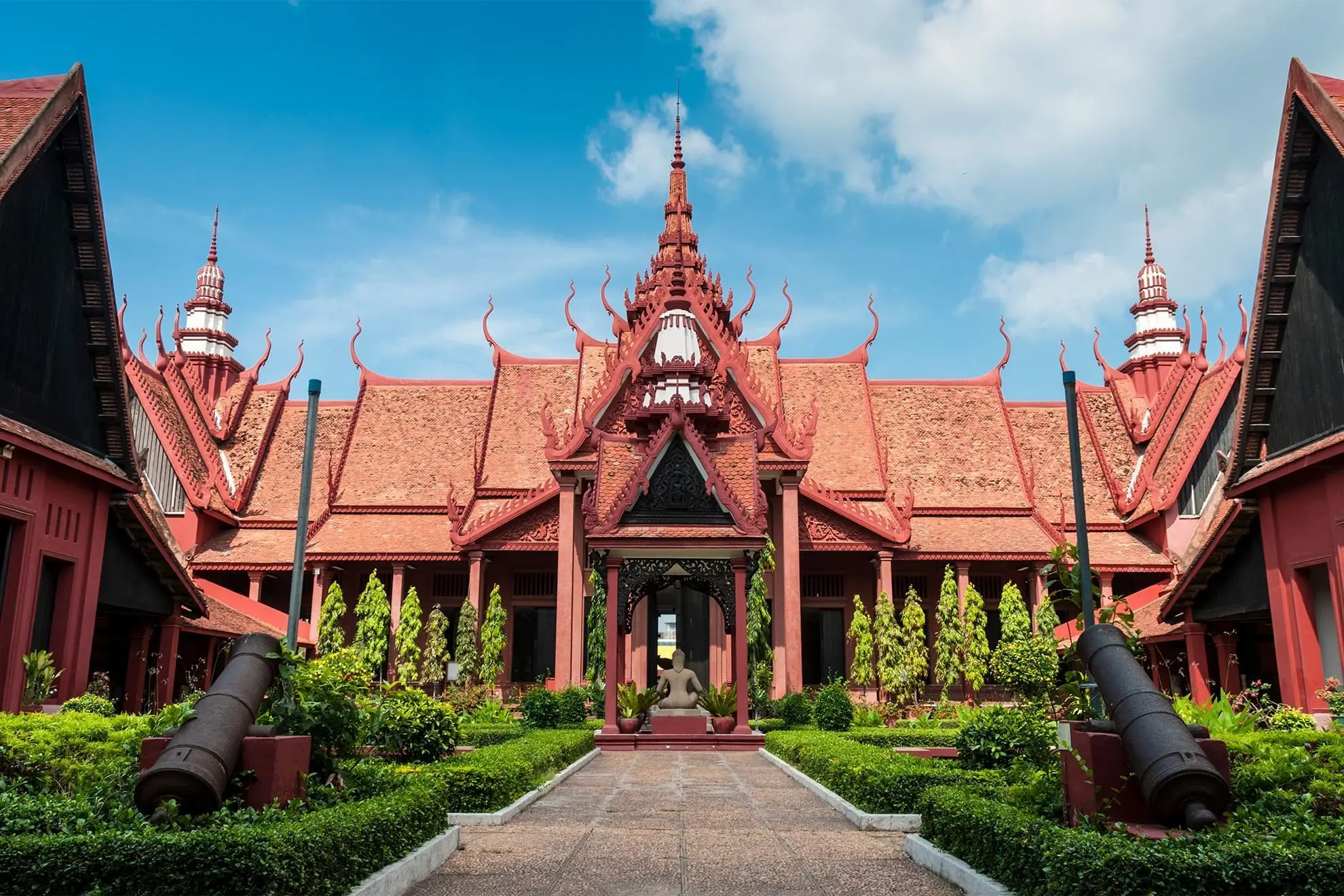
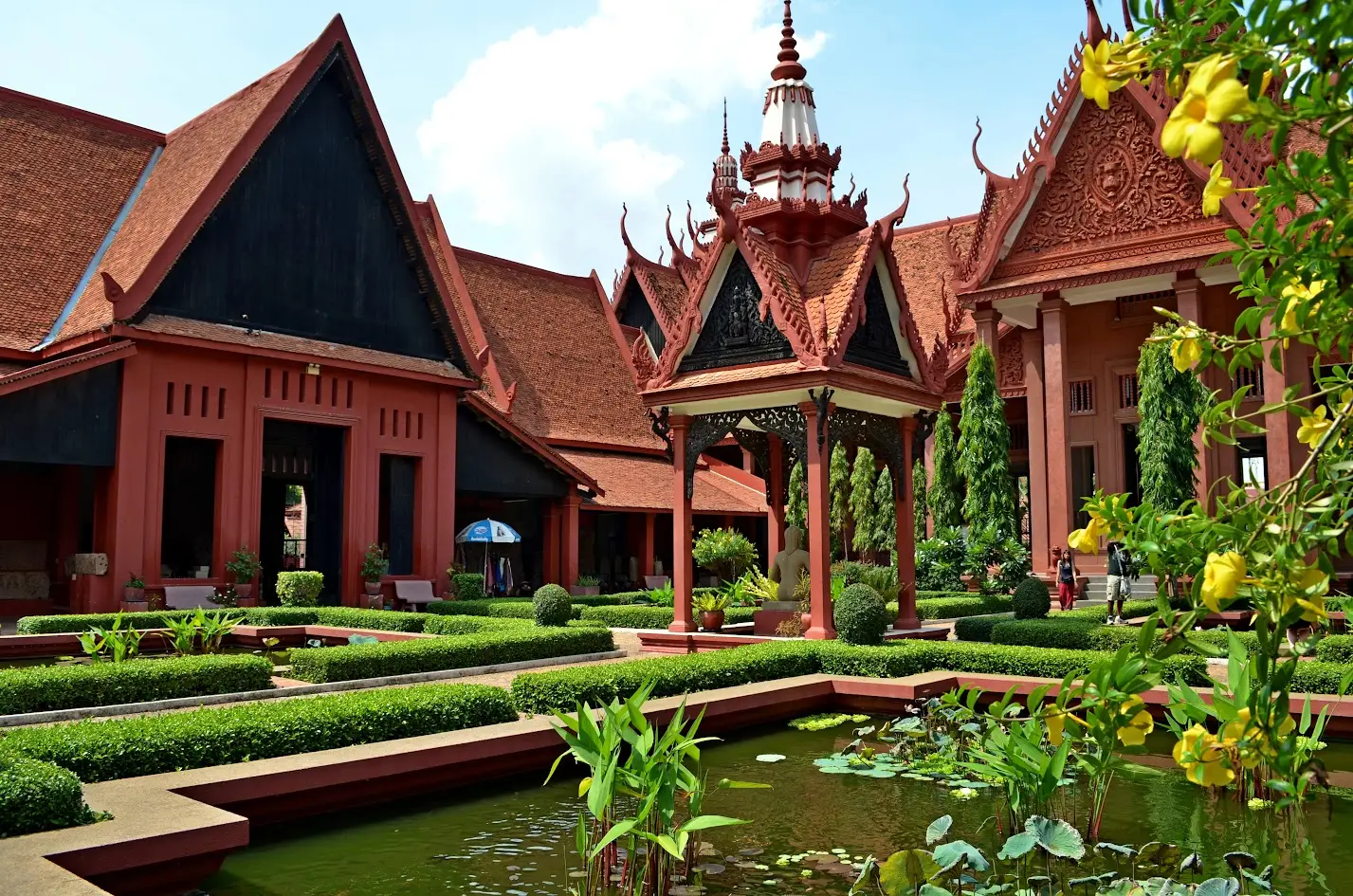
The museum is bordered by Streets 178 (to the north), Street 13 (to the east) and Street 184 (to the south).
The museum buildings were constructed between 1917 and 1924, with the inauguration of the museum in 1920. The central section of the east façade was renovated in 1968 under the supervision of Cambodian architect, Vann Molyvann.
For more information, please visit the organization’s website via the link below.
Contact Information
Address
National Museum of Cambodia Street 13, Sangkat Chey Chumneas, Khan Daun Penh, Phnom Penh Kingdom of Cambodia.